Engineering the Acoustic Standard
By the late 1980s, the heavy reliance on pre-packaged promotional clips left the network structurally vulnerable to the recording industry's whims. The creation of the Unplugged format was a strategic move to secure original, network-owned performance intellectual property. By mandating established artists perform their catalogues exclusively on acoustic instruments, the production team created a standardized aesthetic format that could not be replicated in standard arena tours.
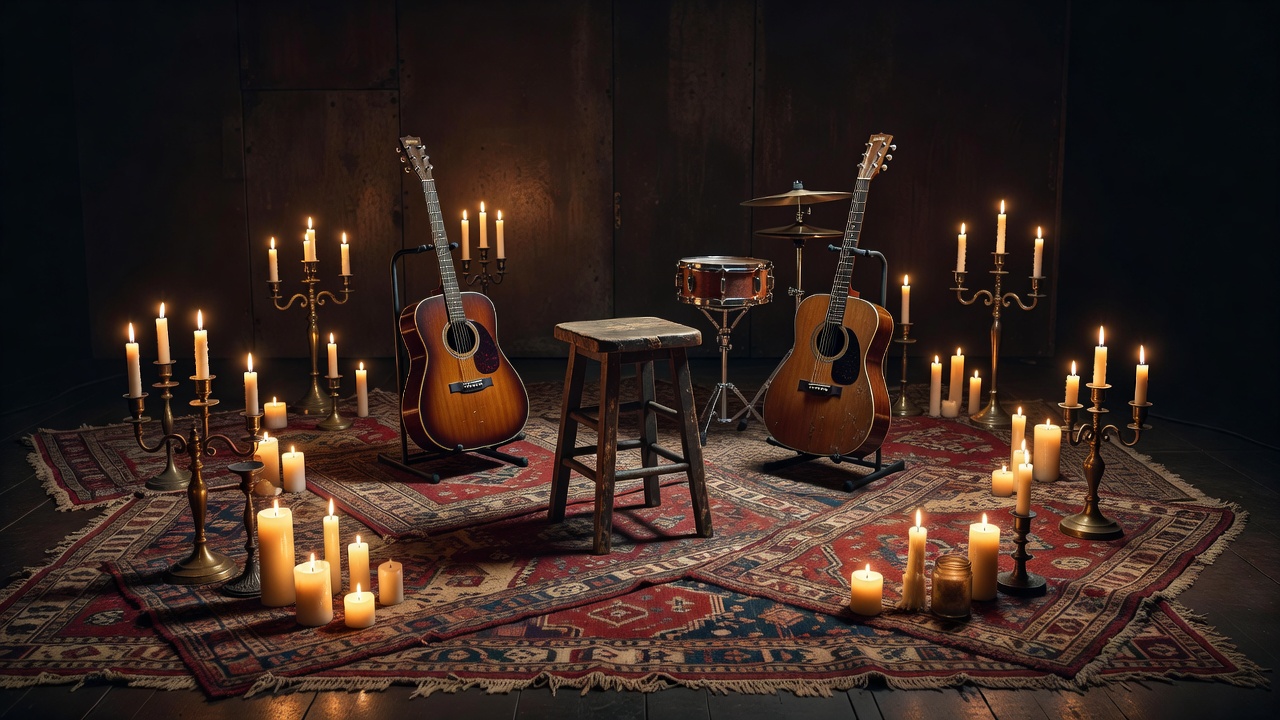
The visual language was strictly controlled. Set design routinely incorporated Persian rugs, dim ambient lighting, candelabras, and close-quarter camera blocking. This enforced intimacy stripped away the stadium pyrotechnics that defined 1980s touring acts, forcing a reliance on raw vocal performance and acoustic string arrangements. The format required complete re-orchestration of heavy synthesizer or distorted guitar tracks, frequently revealing underlying song structures that critics had previously dismissed.
The Live Album Sales Phenomenon
The economic impact of the Unplugged property quickly exceeded its value as a mere broadcast slot. Record labels, initially hesitant to strip down their multi-platinum artists, realized the audio recordings of these sessions operated as highly lucrative live albums. Because the arrangements were entirely novel, they did not cannibalize existing studio album sales. Instead, they acted as a secondary retail engine.
This dynamic reached its commercial apex in the early 1990s. The 1992 broadcast and subsequent album release of Eric Clapton's session dominated the Grammy Awards and shipped tens of millions of physical units. It firmly established the Unplugged banner as a prestige tier within the industry. High-profile appearances by Nirvana, Pearl Jam, and Alice in Chains cemented the format as an essential prestige marker for alternative and grunge acts seeking critical legitimacy beyond the standard heavy rotation blocks.
Format Expansion and Genre Adaptation
While originally geared toward classic rock and alternative acts, the format's true structural resilience was proven when it successfully accommodated hip-hop and R&B. The inclusion of acts like LL Cool J required session bands to recreate programmed drum breaks and synthesized basslines using acoustic percussion and stand-up bass, fundamentally altering the live performance standard for the genre on national television.
The success of the Unplugged property proved to the network executives that audiences would tune in for appointment viewing of network-owned formats. The realization that they did not need to rely solely on the Buzz Bin to drive ratings was a critical evolutionary step. The margins on a single Unplugged session, factoring in broadcast syndication and audio licensing cuts, vastly outperformed the margins on a standard hour of VJ-hosted rotation, permanently altering the company's internal production priorities.
This template of tightly controlled, highly stylized original production became the gold standard for the network, heavily influencing the subsequent creation of award show formats and live studio properties in the ensuing decades.